




Pay-to-Win Models and Monetized Power Asymmetry
 Milijana Komad / 7 min read
Keywords: Pay-to-Win, P2W, Video Gaming, Game Design, Monetization, Player Behaviour
Abstract
The Pay-to-Win (P2W) model describes game systems in which players can purchase meaningful gameplay advantages with real money, thereby altering competitive balance and progression pace. While this model can generate significant revenue, it also reshapes player motivation, fairness perception, and social dynamics, often in ethically problematic ways. This paper analyzes the psychological and product-design foundations of P2W, outlines its core mechanics, and examines representative case studies from contemporary games. It further explores the impact of P2W on player trust, community health, and regulatory debates, and proposes guidelines for more responsible monetization strategies.
Introduction
Monetization has evolved from one-time purchases to complex hybrid models combining cosmetics, subscriptions, battle passes, loot boxes, and direct power sales. Pay-to-Win sits at the most controversial end of this spectrum. Instead of limiting purchases to aesthetic customization or convenience, P2W allows players to buy power — stronger characters, superior equipment, faster progression, or direct competitive advantages.
From a psychological perspective, Pay-to-Win exploits status anxiety, competitive drive, and sunk-cost bias. From a design perspective, it turns progression systems into monetization funnels. The model is not simply a pricing strategy; it is a behavioral architecture that conditions users to equate advantage with payment.
Defining the Pay-to-Win Model in Game Design
Although communities debate where exactly “Pay-to-Win” begins, three criteria commonly appear:
- Purchasable Advantage — Real-money purchases produce clear, repeatable performance benefits (damage, stats, speed, matchmaking edge).
- Competitive Impact — Those advantages significantly affect outcomes in PvP or leaderboard-oriented contexts.
- Non-Cosmetic Progression — Purchases alter gameplay capabilities, not just appearance or quality-of-life convenience.
Some titles implement “soft” P2W — where spending accelerates progress, but non-spenders can theoretically reach parity after extreme grinding. Others adopt “hard” P2W, where certain power thresholds are effectively unreachable without payment.
Design Mechanics that Enable Pay-to-Win
1. Power-Linked Microtransactions
Instead of selling cosmetic skins, P2W economies link microtransactions to raw power: higher-tier gear, stat boosts, or rare characters. These purchases often stack, making spending cumulative and functionally limitless.
2. Progression Gates and Time Walls
Designers introduce artificial constraints such as energy systems, long upgrade timers, and resource bottlenecks. While these mechanics exist in many free-to-play games, in P2W they are tightly coupled with premium shortcuts: paying removes friction, while non-payers experience stagnation.
3. Randomized Power (Loot Boxes & Gacha)
When loot boxes or gacha banners contain gameplay-relevant items, randomness amplifies both spending and frustration. Players pay not only for power but for probability, repeatedly investing in uncertain results. This pattern introduces gambling-like behavior and intensifies sunk-cost dynamics.
4. Matchmaking and Status Systems
If ranking systems, leagues, or matchmaking are sensitive to paid power, P2W restructures the entire social fabric of the game. Spenders cluster at the top, non-spenders are pushed downward, and competition becomes stratified by purchasing ability.
Case Studies: Pay-to-Win in Practice
1. Clash of Clans / Clash Royale (Supercell)
Supercell’s strategy titles are often cited as examples of “soft P2W.” Players can purchase gems to accelerate construction, unlock chests faster, and obtain higher-rarity cards or troops. In competitive ladders, spending compresses months of grinding into hours. Although free players can theoretically reach the same levels, the time–money exchange strongly favors those who pay, especially in early and mid-game matchmaking.
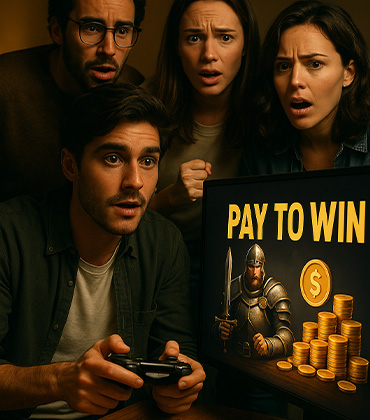

2. FIFA Ultimate Team (EA Sports)
FIFA Ultimate Team allows players to buy card packs with real money. Purchasing packs can increase access to highly rated players, which may provide gameplay advantages. The size of any association between spending and competitive performance requires game-specific evidence.
3. Genshin Impact and P2W Debates
Genshin Impact illustrates a broader category of paid gameplay advantages, including progression and optimization benefits outside direct PvP competition. This should be distinguished from the narrower competitive definition introduced above. Access to characters and weapons through gacha can influence progression options without making the example equivalent to buying an advantage over a direct PvP opponent.
4. Mobile MMORPGs (Generic Pattern)
Many mobile MMORPGs employ aggressive P2W systems: VIP tiers, paid stat boosts, exclusive gear packs, and top-up events with power-scaling bonuses. Guilds often recruit based on spending level, and server-wide leaderboards are effectively auctions of financial commitment. Progress becomes less about mastery and more about willingness to pay.
Implications for Player Behaviour and Communities
1. Erosion of Fairness and Trust
Perceived fairness is central to long-term engagement. When players believe outcomes are primarily determined by money rather than skill, procedural justice breaks down. Studies on digital game monetization link P2W perceptions to decreased satisfaction and higher churn, especially among competitive players.
2. Social Stratification and “Wallet Wars”
P2W introduces economic class structures into virtual worlds. High spenders enjoy elevated status, faster progress, and social prestige; non-spenders are relegated to support roles or lower tiers. This stratification undermines meritocratic ideals and can fuel resentment, toxicity, or internalized pressure to spend.
3. Compulsive Spending and Financial Harm
Because P2W is often intertwined with loot-box mechanics and time-limited offers, it can encourage overspending, especially among younger or vulnerable players. Research has found associations between loot-box purchases and problem gambling severity, signalling wider risks when Pay-to-Win is built on the same infrastructure.
4. Shift from Intrinsic to Extrinsic Motivation
Power-linked purchases may shift some players’ attention toward rankings and external rewards. Whether they reduce intrinsic motivation depends on the player, the game, and how the purchases are implemented.
Ethical and Regulatory Considerations
From an ethical standpoint, Pay-to-Win raises several questions:
- Is competition meaningful if performance correlates with spending capacity?
- At what point does monetization become economic coercion rather than optional support?
- How should designers protect minors and vulnerable users from financial harm?
Several jurisdictions have begun regulating loot boxes and exploring consumer-protection measures around P2W mechanics. Proposals include:
- clear disclosure of odds for randomized rewards;
- spending caps or self-exclusion tools;
- age ratings reflecting aggressive monetization;
- separating ranked competitive modes from power-linked purchases.
For designers, ethical alternatives include:
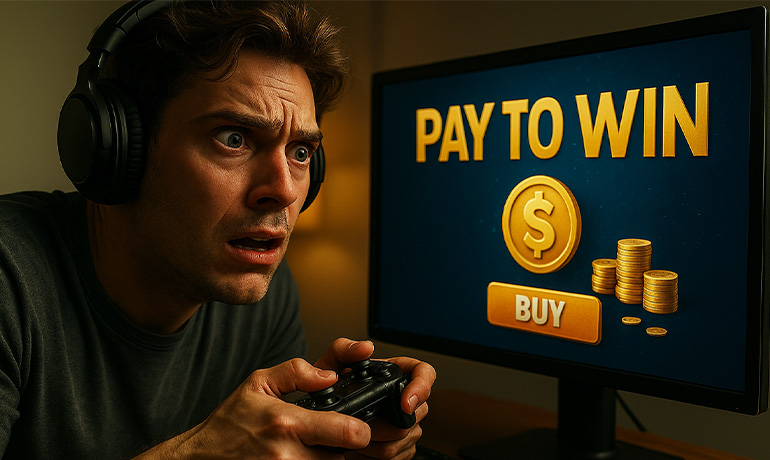
- confining monetization to cosmetics and expansions;
- offering “fair grind” paths that genuinely match paid power;
- keeping competitive modes power-neutral and monetizing only aesthetics there;
- using transparent communication about what money can and cannot buy.
Conclusion
The Pay-to-Win model is not just a pricing strategy; it is a psychological and structural choice. By selling power, designers reframe games from arenas of mastery to marketplaces of advantage. While the short-term revenue gains can be substantial, the long-term costs — loss of trust, community fragmentation, regulatory scrutiny, and ethical critique — are equally significant.
Future-oriented product design must treat fairness as a core design constraint, not an optional virtue. The most sustainable games will be those in which money can accelerate access or expand expression, but cannot quietly buy victory. When success is grounded in skill, strategy, and collaboration rather than payment, players remain not just customers, but communities.
This article is part of a broader research series on behavioral manipulation in digital products.
For a comprehensive theoretical framework, see:
Engineering Behavior: Psychological Manipulation in Digital Products





Related posts
Digital Monetization
Digital Monetization
The Sunk Cost Fallacy in Behavioral Product Design
Behavioral Design
Fear of Missing Out (FOMO) as a Behavioral Manipulation Mechanism
DIGITAL DESIGN EXPERIENCE
MILIJANA KOMAD